Bugs on Your Christmas Tree? 6 Common Utah Christmas Tree Pests & How to Prevent Them
As families head to local Christmas tree farms in the Wasatch and Uinta mountains to select their perfect Fraser fir or Douglas fir, few realize they might be bringing home more than holiday cheer. Real Christmas trees are beautiful and create cherished memories, but they can also harbor insects that have been dormant in the cold mountain air. Once your tree warms up inside your heated home, these hidden hitchhikers wake up, and suddenly you’re dealing with unexpected guests during your holiday celebrations.
The good news? Most Christmas tree insects are harmless, won’t infest your home, and can be easily managed with the right preparation. Here’s everything Utah homeowners need to know about the six most common bugs found on Christmas trees.
Why Do Christmas Trees Have Bugs?
Christmas trees harvested from Utah’s mountain forests are natural habitats for various forest insects. When temperatures drop below freezing, these insects enter a state of dormancy, essentially hibernating to survive the cold. When you bring that tree into your heated home (where temperatures are sixty-eight to seventy-two degrees), you’re bringing those insects from winter directly into summer-like conditions. Within twenty-four to forty-eight hours, dormant insects wake up, and eggs begin to hatch.
However, Utah’s dry winter climate works in your favor. Most Christmas tree insects need humid forest conditions and cannot survive in your home’s dry, heated indoor air. They may be active for a few days, but they quickly die off.
The 6 Most Common Bugs on Utah Christmas Trees
1. Aphids
Aphids are among the most common pests on Utah Christmas trees, particularly on balsam fir, spruce, Fraser fir, and pine. These tiny insects (no bigger than a pinhead) cluster near lower branches and inner sections where they feed on sap. When your tree is first brought inside, aphids are dormant, but within one to two days of warmth, they become active and start moving around your tree.
The critical thing to remember: do not squish them. When crushed, aphids release body fluids that leave persistent red, brown, or rust-colored stains on carpet, ornaments, and walls. Instead, use a handheld vacuum to remove them. Most aphids die on their own within three to four days as your home’s dry air dehydrates them.
2. Adelgids
Adelgids cover themselves in a white, woolly, waxy substance that looks remarkably like snow clinging to branches. When your tree first arrives, this white coating blends in with any frost, making adelgids nearly impossible to detect. The telltale sign comes after your tree has been indoors for a day or two, where real snow melts, but adelgids remain as white, cottony patches on branches.
These insects are particularly common on spruce, fir, and pine trees. They’re relatively harmless and don’t leave stains like aphids. You can gently brush them off with a soft cloth or vacuum them. Like other Christmas tree insects, they die off naturally within several days indoors.
3. Bark Beetles
Bark beetles bore into bark and wood, creating tiny, perfectly round exit holes. If you notice small piles of fine sawdust near the base of your tree or see tiny, round holes in the bark, you’re dealing with bark beetles.
The good news is bark beetles pose no threat to your wooden furniture or home structure. They’re specialized to attack living trees in forest conditions and cannot infest dried, finished wood. Once separated from their host tree, they cannot complete their lifecycle. Simply vacuum them up if you see them.
4. Spiders and Spider Mites
If you notice tiny brown, red, or black dots moving on your tree, or fine webbing between branches, you’re likely dealing with spiders or spider mites. Spider mites (which aren’t actually spiders) appear as moving specks and create fine, silky webbing. They can cause needles to turn brown or drop prematurely, and like aphids, they leave stains when crushed.
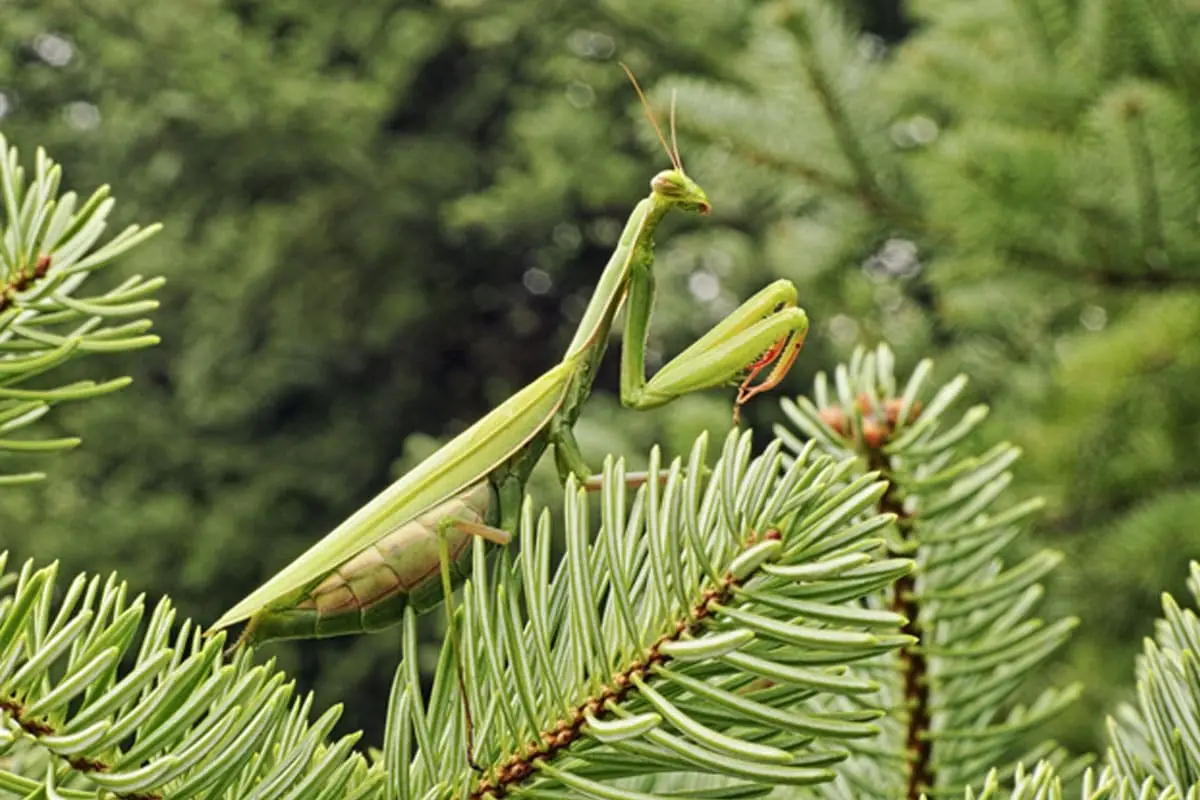
5. Praying Mantis Egg Cases
Praying mantis egg cases (oothecae) look like tan or light brown foam structures about the size of a walnut, attached to branches or trunk. Each case can contain fifty to four hundred eggs. In nature, these cases overwinter and hatch in spring. When you bring a tree with an egg case into your warm home, you create artificial spring conditions. Within one to three weeks, the case hatches and suddenly you have dozens or hundreds of tiny mantises in your living room.
While praying mantises are harmless and beneficial, baby mantises cannot survive indoors. If you discover an egg case before it hatches, carefully remove the branch and place it outside. If it has already hatched, gently collect the baby mantises in a container and release them outside.
6. Pine Needle Scale
Small white or grayish oval bumps attached to needles indicate pine needle scale. These are particularly common on Douglas fir, Norway spruce, and Scotch pine. Underneath each scale covering is a tiny insect feeding on sap. When warmed, tiny red or orange crawlers emerge from these white bumps, though they won’t survive long indoors.
Scale insects don’t cause immediate problems but can make needles turn yellow or drop prematurely. You can gently wipe them off with a damp cloth. The crawlers will die within days due to lack of humidity and proper food sources.
How to Prevent Christmas Tree Bugs
1. Shake vigorously before bringing home. Most tree lots have mechanical shakers. If not, shake the tree firmly several times. This removes loose insects, egg cases, debris, and excess needles.
2. Stage in your garage or covered porch. Leave the tree in an unheated space for twenty-four to forty-eight hours before bringing it inside. This allows disturbed insects to emerge in a controlled environment rather than your living room. Check around the base afterward and sweep up any insects that crawled off.
3. Spray down with water (optional). If weather permits, spray your tree thoroughly with a strong stream of water, focusing on the trunk and inner branches. Let it dry completely before bringing inside.
4. Final inspection before setup. Look for obvious egg cases, spider webs, or visible insects. Remove any concerning branches.
5. Monitor the first week. Place a light-colored tree skirt under your tree to easily spot insects. Keep a handheld vacuum nearby and check daily for the first week. Most insects emerge within the first three to five days.
What NOT to Do
Don’t squish aphids or spider mites. They leave persistent stains. Always vacuum or carefully remove them.
Don’t ignore praying mantis egg cases. Remove them before they hatch. Having hundreds of baby mantises during Christmas isn’t as charming as it sounds.
Don’t panic. Seeing a few insects doesn’t mean you need to throw out your tree. Most die off within days with simple management.
Utah-Specific Tips
Local farms vs. commercial lots. Local farms in areas like Heber Valley, Kamas, and Park City allow you to cut fresh trees and inspect thoroughly. Commercial lots may have older trees where insects have already emerged or died.
When to Call a Professional
Contact a pest control professional if you’re seeing hundreds of insects spreading throughout your home, insects that seem to be reproducing rather than dying off, or if insects continue emerging after two weeks indoors.
If you’re in the Wasatch, Summit, Salt Lake, or Utah County areas and need assistance, Nature’s Balance Pest Control provides eco-friendly solutions safe for use around decorations, children, and pets.
Frequently Asked Questions
Q: Are Christmas tree bugs dangerous?
A: No. They don’t bite, sting, or pose health risks to humans or pets. They’re harmless forest insects confused by their environment change.
Q: Will they infest my house?
A: No. These insects need living evergreen trees in outdoor conditions. They cannot survive in your dry, heated home and will die within days.
Q: How long do bugs stay active indoors?
A: Most are active for two to five days before dying. The majority emerge within the first forty-eight hours after entering your warm home.
Q: Can I spray insecticide on my tree?
A: We strongly advise against it. It creates safety hazards near lights and in living spaces. Prevention methods are safer and more effective.
Q: Why do bugs appear after my tree has been inside a few days?
A: The bugs were dormant in the cold. Once in your warm home (68-75°F), they interpret this as spring and emerge from dormancy within 24-72 hours.
Q: Is it better to get a tree early or late in the season?
A: Fresh trees may have more dormant insects but stay green longer. Older trees may have fewer insects but dry out faster. Most experts recommend fresh trees with proper prevention methods.
Enjoying Your Real Christmas Tree
Finding insects on your Christmas tree might be startling, but armed with this knowledge, you can confidently enjoy your real tree throughout the holidays. These insects are harmless temporary visitors, and with simple prevention—shaking, staging, and monitoring—you can minimize issues before they start.
Real Christmas trees connect us to Utah’s beautiful mountain forests and create authentic holiday atmosphere. The fresh pine scent and natural beauty are worth the minor inconvenience of managing a few insects.
From all of us at Nature’s Balance, we wish you a wonderful, pest-free holiday season. If you need assistance with Christmas tree bugs or any holiday pest concerns, we serve families throughout Park City, Heber City, Midway, and across Summit, Wasatch, Salt Lake, and Utah Counties. Our eco-friendly pest control is safe for your family and perfect for holiday concerns. Contact us today for help, and happy holidays!